
February 12 , 2015
Follow@medhajnews


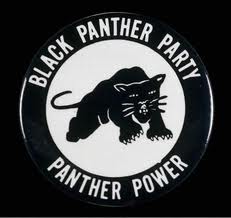
Forty-five years ago, on Dec. 4, 1969, a unit of 14 Chicago police officers, under the direction of Cook County State’s Attorney Edward Hanrahan, executed a predawn raid on a West Side apartment that left Illinois Black Panther Party (BPP) leaders Fred Hampton and Mark Clark dead, several other young Panthers wounded and seven raid survivors arrested on bogus attempted murder charges. Though Hanrahan and his men claimed there had been a shootout that morning, physical evidence eventually proved that, in reality, the Panthers had only fired a single shot in response to approximately 90 shots from the police. A multitude of evidence shows that the FBI, which is charged by law with investigating crimes and preventing criminal conduct, itself engaged in lawless tactics and responded to deep-seated social problems by fomenting violence and unrest to take down the BPP. Much of the following evidence was drawn from the website of a former Panther, Assata Shakur.
J. Edgar Hoover’s Spies
Chicago Black Panther Party Chief of Security William O’Neal was a paid informant for the FBI. When a group of lawyers working at the People’s Law Office on a civil rights lawsuit filed on behalf of the Hampton and Clark families and the survivors of the Dec. 4 raid, the group subpoenaed the Chicago FBI’s Black Panther Party files. In response, the FBI produced a small number of documents that included a detailed floor plan of the BPP apartment specifically identifying the bed where Hampton slept, which O’Neal had supplied to Hanrahan before the raid by way of his FBI control agent. The last volume produced by the government was O’Neal’s control file. In it was yet another smoking gun: a memo from the Chicago office to FBI headquarters requesting a $300 bonus to reward O’Neal for his information, which the memo asserted was of “tremendous value.” A return memo from headquarters approved this request.
Destruction Recognized by Supreme Court
In April 1979, the 7th Circuit Court of Appeals found that the FBI and its government lawyers had obstructed justice by suppressing the BPP files. The Court of Appeals also concluded that there was substantial evidence to support the conclusion that the FBI defendants, in planning and executing the raid, had participated in a “conspiracy designed to subvert and eliminate the Black Panther Party and its members,” thereby suppressing a “vital radical-Black political organization.” The court further found there to be convincing evidence that these defendants also participated in a separate post-raid conspiracy to “conceal the true character of [their] pre-raid and raid activities,” to “harass the survivors of the raid” and to “frustrate any [legal] redress the survivors might seek.” The next year, this landmark decision withstood a challenge in the U.S. Supreme Court. It stands today as judicial recognition of outrageous federal and local criminality and cover-up.
Setting Blacks Against Each Other
Although the claimed purpose of the Bureau’s COINTELPRO spying operation on Black leaders was to prevent violence, some of the FBI’s tactics against the BPP were clearly intended to foster violence, and many others could reasonably have been expected to cause violence. For example, the FBI’s efforts to “intensify the degree of animosity” between the BPP and the Blackstone Rangers, a Chicago street gang, included sending an anonymous letter to the gang’s leader falsely informing him that the Chicago Panthers had “a hit out” on him. The stated intent of the letter was to induce the Ranger leader to “take reprisals against” the Panther leadership. In Southern California, the FBI launched a covert effort to “create further dissension in the ranks of the BPP.” This effort included mailing anonymous letters and caricatures to BPP members ridiculing the local and national BPP leadership for the express purpose of exacerbating an existing “gang war” between the BPP and an organization called the United Slaves (US). This “gang war” resulted in the killing of four BPP members by members of US and in numerous beatings and shootings.
Harassing Interviews
The FBI also resorted to anonymous phone calls. The San Diego field office placed anonymous calls to local BPP leaders naming other BPP members as “police agents.” According to a report from the field office, these calls, reinforced by rumors spread by FBI informants within the BPP, induced a group of Panthers to accuse three Party members of working for the police. The field office boasted that one of the accused members fled San Diego in fear for his life. The FBI conducted harassing interviews of Black Panther members to intimidate them and drive them from the Party. The Los Angeles office claimed that similar tactics had cut the membership of the United Slaves (US) by 50 percent.
Inciting Evictions
FBI agents attempted to convince landlords to force Black Panther members and offices from their buildings. The Indianapolis Field Office reported that a local landlord had yielded to its urgings and promised to tell his Black Panther tenants to relocate their offices. The San Francisco office sent an article from the Black Panther newspaper to the landlord of a BPP member who had rented an apartment under an assumed name. The article, which had been written by that member and contained her picture and true name, was accompanied by an anonymous note stating, “(false name) is your tenant (true name)”. The San Francisco office secured the eviction of one Black Panther who lived in a public housing project by informing the Housing Authority officials that she was using his apartment for the BPP Free Breakfast Program.
Breaking Up Marriages
The Bureau also attempted to undermine the morale of Panther members by attempting to break up their marriages. In one case, an anonymous letter was sent to the wife of a prominent Panther leader stating that her husband had been having affairs with several teenage girls and had taken some of those girls with him on trips. Another Panther leader told a Committee staff member that an FBI agent had attempted to destroy his marriage by visiting his wife and showing photographs purporting to depict him with other women.
Driving Wedge Between Newton and Cleaver
In March 1970, the FBI initiated a concerted program to drive a permanent wedge between the followers of Eldridge Cleaver, who was then out of the country, and the supporters of Huey P. Newton, who was then serving a prison sentence in California. An anonymous letter was sent to Cleaver in Algeria stating that BPP leaders in California were seeking to undercut his influence. The Bureau subsequently learned that Cleaver had assumed the letter was from the then Panther representative in Scandinavia, Connie Matthews, and that the letter had led Cleaver to expel three BPP international representatives from the Party. Encouraged by the apparent success of this letter, FBI headquarters instructed its Paris Legal Attache to mail a follow-up letter, again written to appear as if Matthews was the author, to the Black Panther Chief-of-Staff, David Hilliard, in Oakland, California. The letter alleged that Cleaver “has tripped out. Perhaps he has been working too hard,” and suggested that Hilliard “take some immediate action before this becomes more serious.”
Turning White People Against Panthers
The FBI’s program to “neutralize” the Black Panther Party included attempts to deter individuals and groups from supporting the Panthers and, when that could not be accomplished, often extended to covert action targeted against those supporters. The Bureau made a series of progressively more severe efforts to destroy the confidence between the Panthers and one of their major California supporters, Donald Freed, a writer who headed an organization of white BPP sympathizers called “Friends of the Panthers.” In July 1969, the Los Angeles Field Office sent the local BPP office a memorandum bearing Freed’s name and address to “Friends of the Panthers.” Written in a condescending tone and including a list of six precautions whites should keep in mind when dealing with Panthers, the memorandum was calculated to cause a “rift between the Black Panther Party and their assisting organizations.” A few days later, the Bureau had leaflets placed in a park near a BPP-sponsored national conference in Oakland, California, alleging that Freed was a police informant.
Outing Hollywood Celebs Like Jane Fonda
Famous entertainment personalities who spoke in favor of Panther goals or associated with BPP members became the targets of FBI programs. When the FBI learned that one well-known Hollywood actress had become pregnant during an affair with a BPP member, it reported this information to a famous Hollywood gossip columnist in the form of an anonymous letter. In June 1970, FBI headquarters approved another anonymous letter informing Hollywood gossip columnist Army Archerd that actress Jane Fonda had appeared at a BPP fund-raising function, noting that “It can be expected that Fonda’s involvement with the BPP cause could detract from her status with the general public if reported in a Hollywood ‘gossip column.’” The wife of a famous Hollywood actor was targeted by the FBI when it discovered that she was a financial contributor and supporter of the BPP in Los Angeles. A caricature attacking her was prepared by the San Diego FBI office. A famous entertainer was also targeted after the Bureau concluded that he supported the Panthers. The Bureau also contacted the employers of BPP contributors. It sent a letter to the president and a vice-president of Union Carbide in January 1970 after learning that a production manager in its San Diego division contributed to the BPP.
Shutting Down Free Breakfast Program
One of the Bureau’s prime targets was the BPP’s free “Breakfast for Children” program, which FBI headquarters feared might be a potentially successful effort by the BPP to teach children to hate police and to spread “anti-white propaganda.” In an admitted attempt “to impede their contributions to the BPP Breakfast Program,” the FBI sent anonymous letters and copies of an inflammatory Black Panther Coloring Book for children to contributors, including Safeway Stores, Inc., Mayfair Markets, and the Jack-In-The-Box Corporation. When the coloring book came to the attention of the Panthers’ national leadership, Bobby Seale ordered it destroyed because the book “did not correctly reflect the ideology of the Black Panther Party…” Churches that permitted the Panthers to use their facilities in the free breakfast program were also targeted. When the FBI’s San Diego office discovered that a Catholic priest, Father Frank Curran, was permitting his church in San Diego to be used as a serving place for the BPP Breakfast Program, it sent an anonymous letter to the bishop of the San Diego Diocese informing him of the priest’s activities. It also placed three telephone calls from “parishioners” protesting Curran’s support of the BPP program to the auxiliary bishop of the San Diego Diocese. A month later, the San Diego office reported that Father Curran had been transferred from the San Diego Diocese to “somewhere in the State of New Mexico for permanent assignment.”
Freedom Archvies
“ Stay updated on the go with The Medhaj New’s mobile apps. Click here to download it for your device.”

